The Terracotta Army is a buried force of life-size clay soldiers, horses and chariots made to guard the tomb of Qin Shi Huang, the first emperor to unite China. Farmers drilling a well found the first fragments in March 1974. Today the site is run as the Emperor Qinshihuang’s Mausoleum Site Museum, in Lintong District, east of central Xi’an.
One ticket covers two areas. The Museum of the Terracotta Warriors holds the three pits. Lishan Garden, a short free shuttle ride away, contains the burial mound itself and the gallery with the two bronze chariots.
Booking your ticket
Every visitor, including foreign visitors and anyone entering free, needs a real-name booking. The museum sells through its official website and two official WeChat accounts. Choose “passport” as the ID type and enter the number exactly as printed.
Tickets are released about 7 days ahead, and peak dates go quickly. The official channels are largely in Chinese and may ask for a Chinese phone number or a Chinese payment method. If that stops you, a licensed agency or a tour can book in your name; the ticket is still tied to your passport. Our paying in China guide covers setting up Alipay or WeChat Pay before you travel.
On the day, arrive 30 minutes before your time slot. The North Gate is the only entrance and the route is one-way. Bring the original passport; it is scanned at the first gate and checked again inside.
Getting there from the city
Metro and bus. Ride to Fangzhicheng and change to Metro Line 9. Get off at Huaqingchi (华清池) and leave by Exit C. Lintong bus 602 or 613 runs from a stop about 200 m away to the museum, a ride of 10–15 minutes. Allow about 1.5 hours door to door from the Bell Tower area.
Tourist Bus 5 (306). This direct bus leaves from a roadside stop about 50 m north of Fangzhicheng Bus Station, not from the old Xi’an Railway Station that older guides mention. The fare is ¥5 in cash and the ride takes 1–2 hours depending on traffic. Ignore anyone near the railway station who says the bus is “broken” and points you to another vehicle.
Taxi or DiDi. From the center it takes about an hour. Recent fares quoted by travel sites run from about ¥120 to ¥220, depending on traffic and pick-up point. At closing time the taxi queue can be long, so the 602 bus back to Line 9 is often quicker.
A sensible route
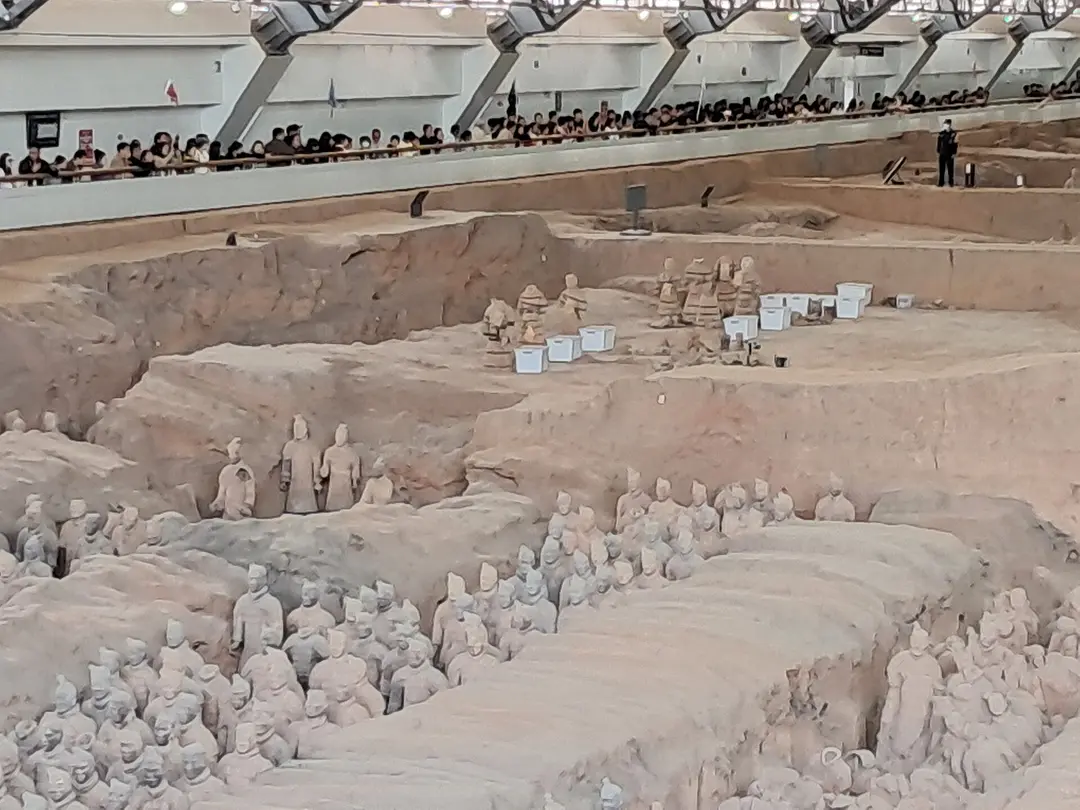
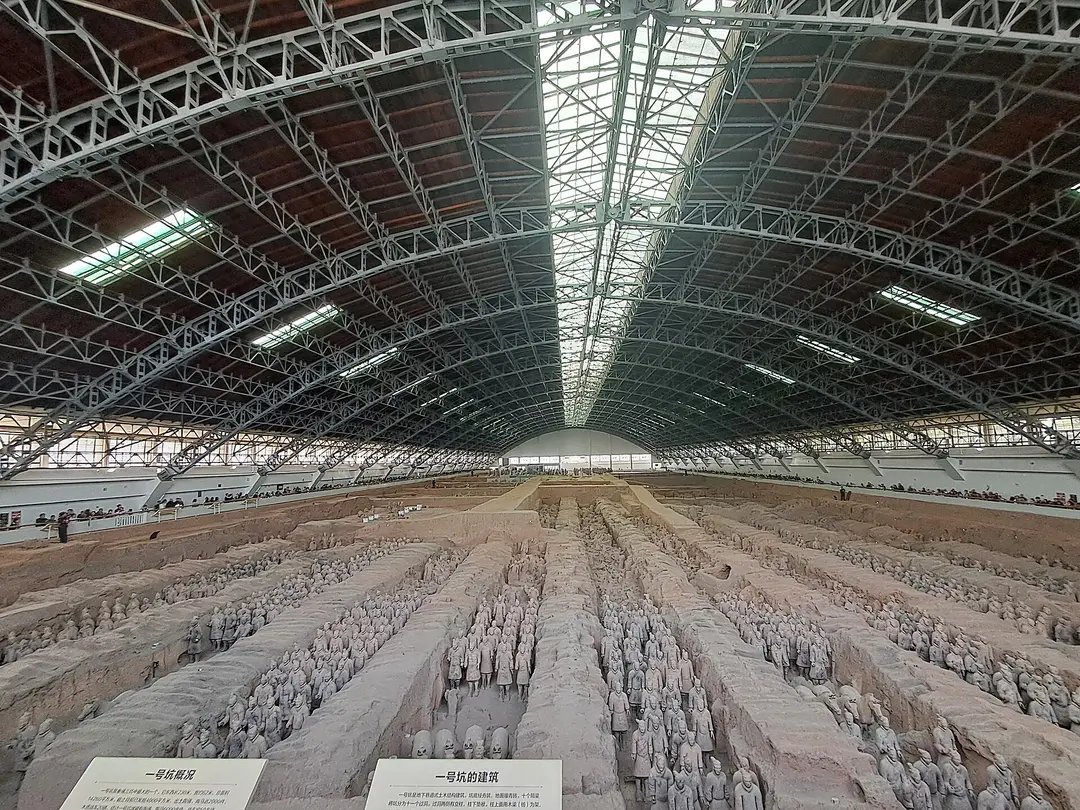
Start with Pit 1, the large hangar-like hall most photographs show. It holds the main army of more than 6,000 figures in parallel trenches, archers at the front. Walk the full perimeter; the far end gives the longest view down the rows.
Go on to Pit 3, the smallest pit, with 68 figures and four horses in a U-shaped layout that is usually read as a command post. Finish at Pit 2, where glass cases at the edge let you see individual figures up close, including a kneeling archer and a cavalryman with his saddled horse. Pit 2 was partly closed for upgrade work in September 2026, so check the museum’s notices for its current layout.
Then take the free shuttle to Lishan Garden. The bronze chariots, each pulled by four bronze horses, are the main reason to go. The burial mound, still unexcavated, is a large wooded hill you can walk around.
When to go
The museum is busiest on Chinese public holidays, in July and August, and on weekend mornings when tour groups arrive. A weekday slot after about 13:00 is calmer, as long as you leave enough time before the last ticket check at 17:00 (16:30 from November 16). In winter the halls are unheated, so dress for outdoor temperatures.
Tips
- Electric carts cost ¥5 inside the museum area and ¥15 at Lishan Garden. The walk between halls is flat and easy.
- Free lockers are available after security, but they do not take valuables, electronics or food. Drones and lighters are not allowed.
- Wheelchairs, strollers and step-free routes are available.
- Shops along the exit route sell souvenirs at a wide range of prices; there is no need to buy anything inside.
- Pair the visit with an early dinner in the city rather than a second sight; most people find one long day here is enough.
Checked on 29 October 2026. Opening times and ticket rules change; confirm on the official site before you go.