The city in brief
Xi’an was the capital of China for long stretches of its early history, including under the first emperor, Qin Shi Huang, and later as Chang’an under the Tang. Today it is a large modern city in Shaanxi province, but its center is still laid out inside a rectangular Ming-dynasty wall, with the Bell Tower at the crossroads.
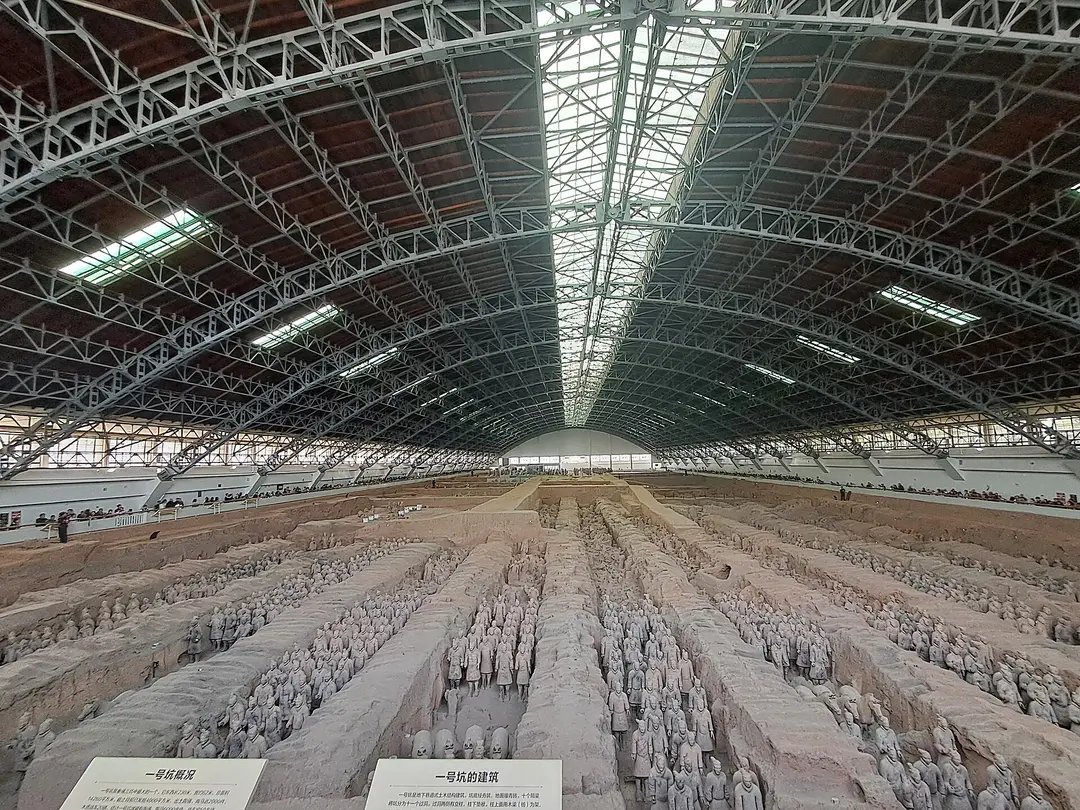
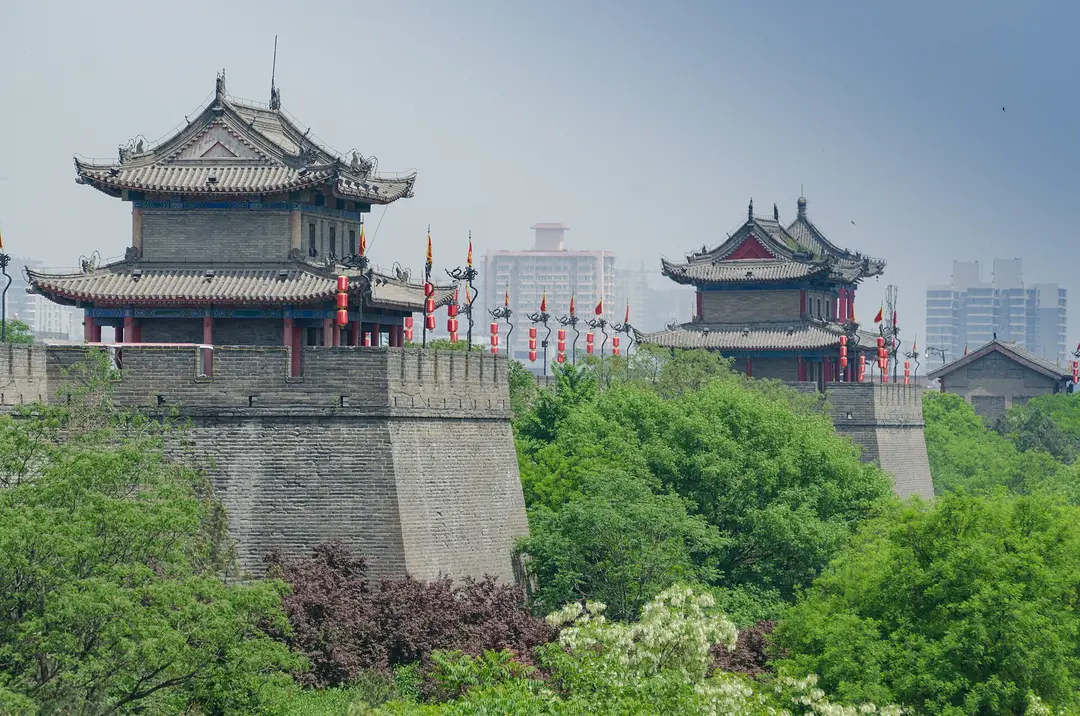
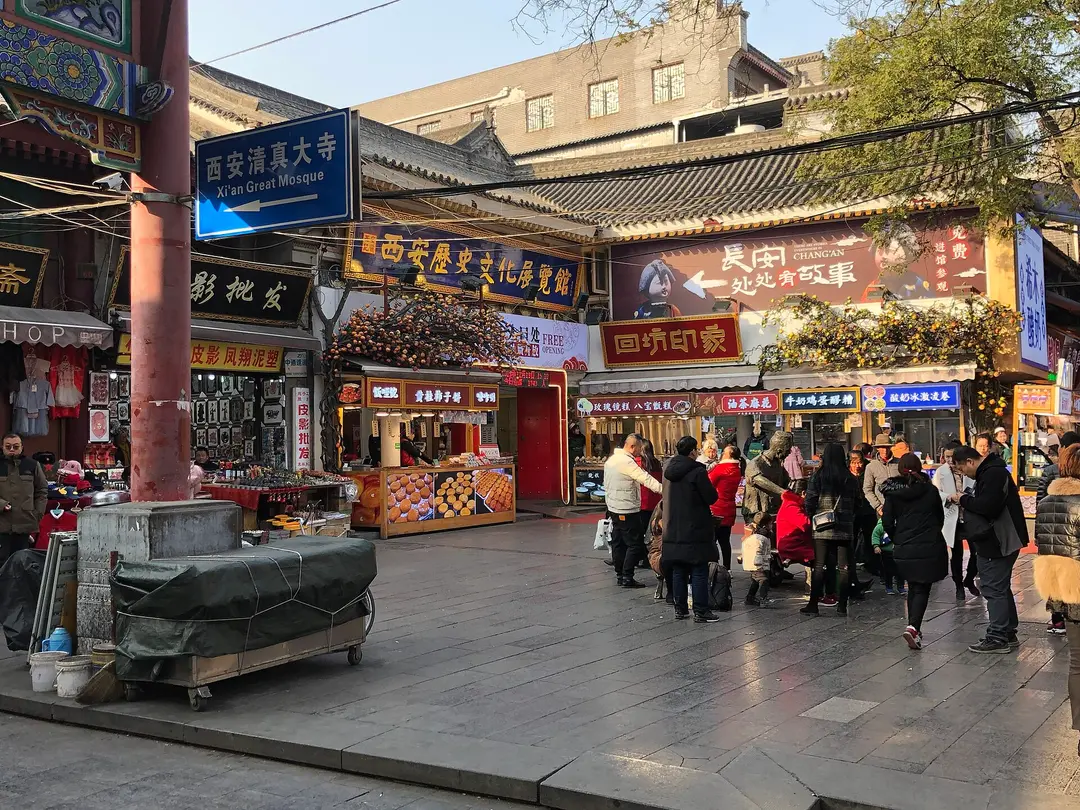
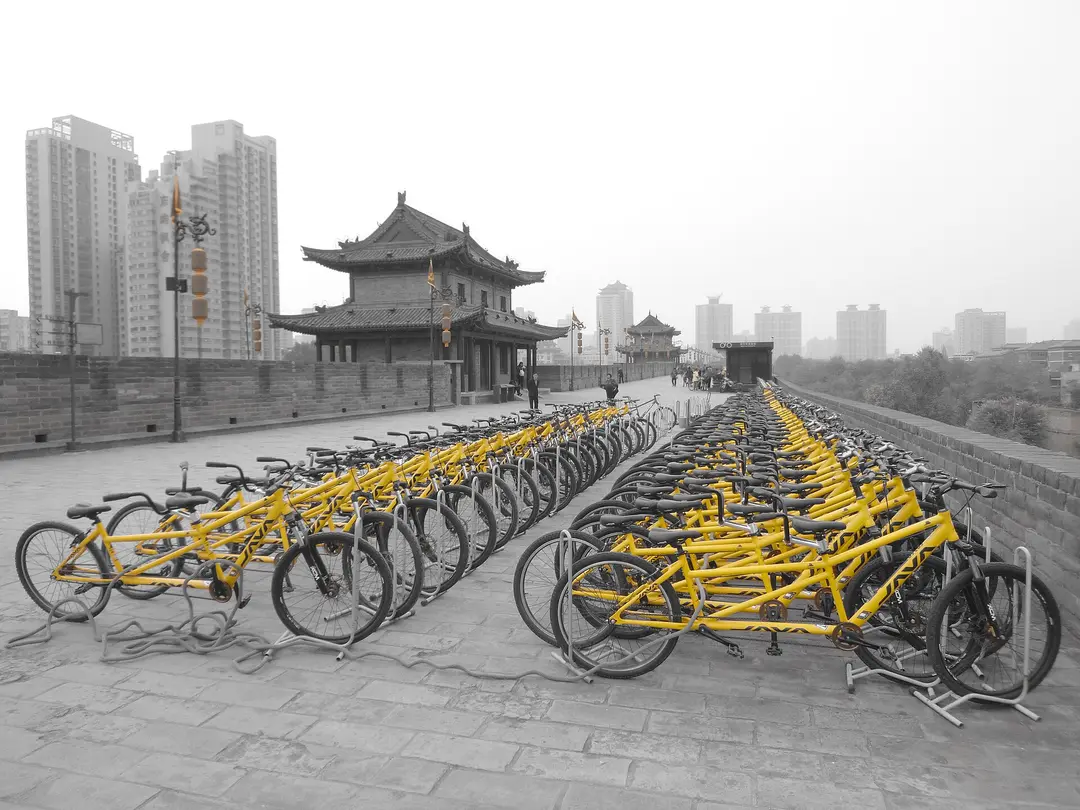
For a visitor that means three things. The Terracotta Army lies about an hour east of the center. The city wall is intact all the way around and you can ride a bike on top. And the Muslim Quarter, behind the Drum Tower, is one of the best places in China to eat on the street.
The old center is flat and compact. Most of what you want inside the wall is within a 20-minute walk of the Bell Tower, and the metro covers the rest.
When to go
Spring (March to May) and autumn (September to November) are the most comfortable. April and October are the most pleasant months and also the busiest. Summer is hot, with July highs of around 38°C and most of the year’s rain falling from June to August. Winter is dry and cold, with January nights below freezing.
Avoid Golden Week, October 1–7, when the Terracotta Army and the city wall see the largest crowds of the year and tickets sell out. Spring Festival, in late January or February, is also very busy, and some food stalls close for several days.
Three days in Xi’an
Day 1: the old city. Start at the Bell Tower and walk to the Drum Tower, a few minutes west. Behind it, follow the lanes of the Muslim Quarter to the Great Mosque, then eat lunch in one of the side streets. In the late afternoon, take Metro Line 2 to Yongningmen and climb the city wall at the South Gate. Rent a bike for the 13.7 km loop, or walk part of it, and stay for the lights on the gate towers after dark.
Day 2: the Terracotta Army. Give this a full day. Take Metro Line 9 to Huaqingchi, then bus 602 or 613 to the museum, or take a taxi of about an hour. See Pits 1, 3 and 2, then ride the free shuttle to Lishan Garden for the bronze chariots and the emperor’s burial mound. Your ticket must be booked online with your passport, about a week ahead. Back in the city, have dinner near your hotel.
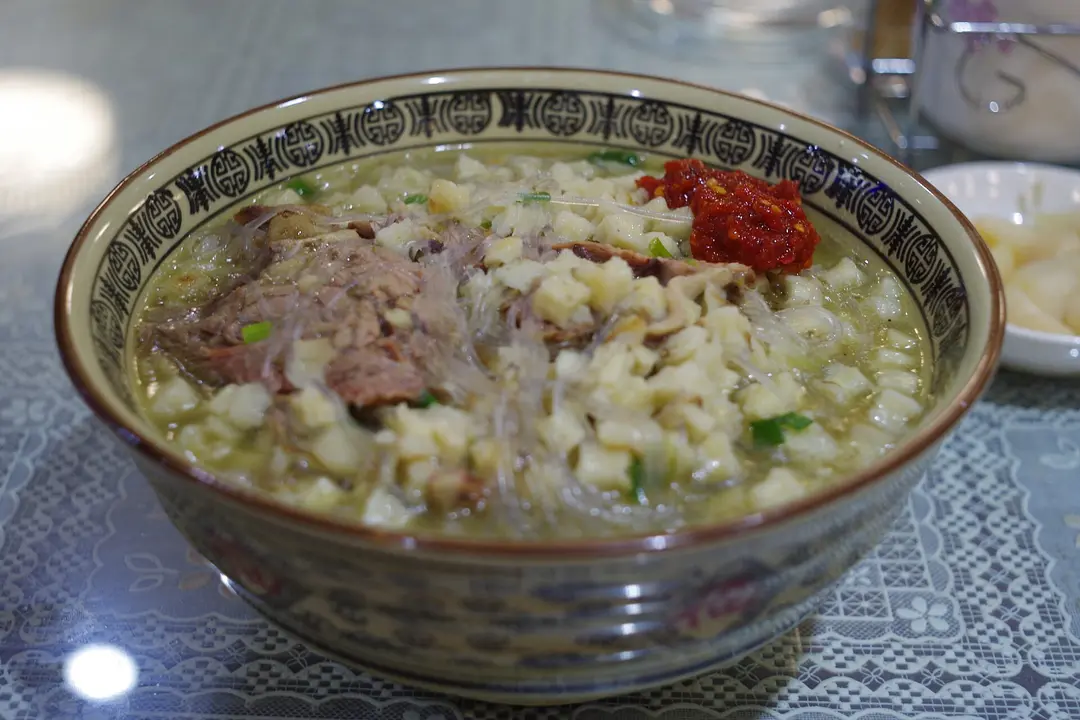
Day 3: south of the wall. Visit the Shaanxi History Museum in the morning. Its main exhibition is free, but it needs a booking through the museum’s WeChat account, and it is closed on Mondays except public holidays. Walk or ride the metro to the Giant Wild Goose Pagoda, a Tang-dynasty brick pagoda, then spend the evening on one of the city’s local food streets. The Xi’an food guide covers what to order and where.
Getting around
Metro. The network is the easiest way to move between the center, the stations and the sights. Fares are distance-based, from ¥2 to about ¥13, and most trips cost ¥3–7. Pay by scanning the transit QR code in Alipay or WeChat at the gate, or buy a single-ride token from the machines, which have an English option. Key stations are Zhonglou (Bell Tower) on Lines 2 and 6 and Yongningmen (South Gate) on Line 2.
From the airport. Xianyang International Airport (XIY) is about 40 km northwest of the center. Metro Line 14 runs from the airport to Xi’an North station, where you change to Line 2 for the Bell Tower; allow about 1 hour 15 minutes in total. A taxi takes about 60–90 minutes.
By train. High-speed trains arrive at Xi’an North station, on Metro Lines 2 and 14. From Beijing the fastest trains take a little over 4 hours. The high-speed trains guide explains booking with a passport.
Taxis and DiDi. Ride-hailing with DiDi is useful for the Terracotta Army and late evenings. Traffic around the city wall gates can be slow at rush hour.
Practical notes
Bring your passport every day. It is your ticket for the Terracotta Army and the Shaanxi History Museum, and you need it for hotel check-in and train travel.
Most of the main sights now use real-name, timed booking. The Terracotta Army releases tickets about 7 days ahead and the Shaanxi History Museum about 5 days ahead, often through WeChat. Set up Alipay and WeChat Pay before you travel; the paying in China and apps and internet guides cover the steps.
Xi’an fits well between Beijing and Chengdu on a first trip. Three days covers the classics at an easy pace. If you would like help putting the route together, see plan your trip.
Checked on 29 October 2026.