Spice and the numbing pepper
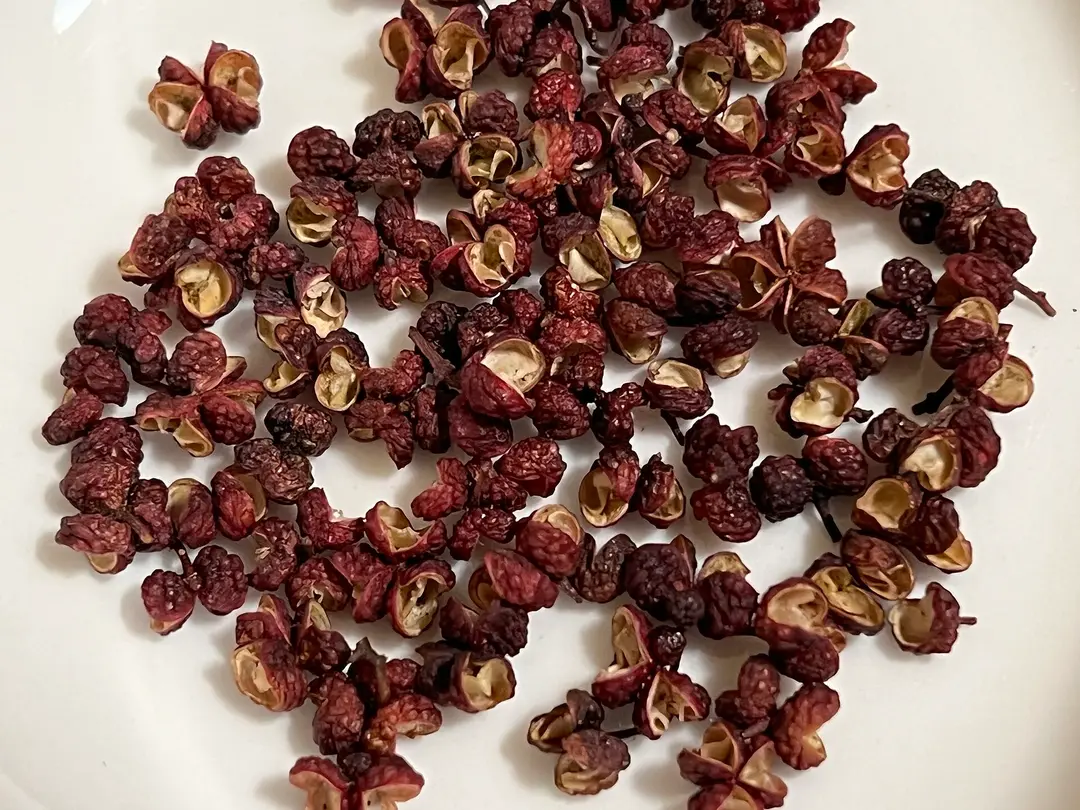
Sichuan food balances two kinds of heat. Chili brings the burn. Sichuan pepper (花椒, huājiāo), the dried husk of a prickly ash berry, brings a tingling, numbing feeling on the lips and tongue. Together they make the taste called málà (麻辣), “numbing and hot.”
The numbing is harmless and fades after a few minutes, but it surprises people the first time. Not every dish is fiery. Many Sichuan dishes are sweet, sour or savory, and most menus have mild options.
Ordering with less spice
These words work in almost any Chengdu restaurant. Show them on your phone if pronunciation is a problem.
- 微辣 (wēi là): slightly spicy, the lowest standard level for hotpot
- 少辣 (shǎo là) or 不要太辣 (bú yào tài là): less spicy, not too spicy
- 不辣 (bú là): not spicy
- 少麻 (shǎo má): less Sichuan pepper
Even “slightly spicy” in Chengdu is hotter than many visitors expect. If you are unsure, order 不辣 for a few dishes and one spicier dish to share.
How hotpot works
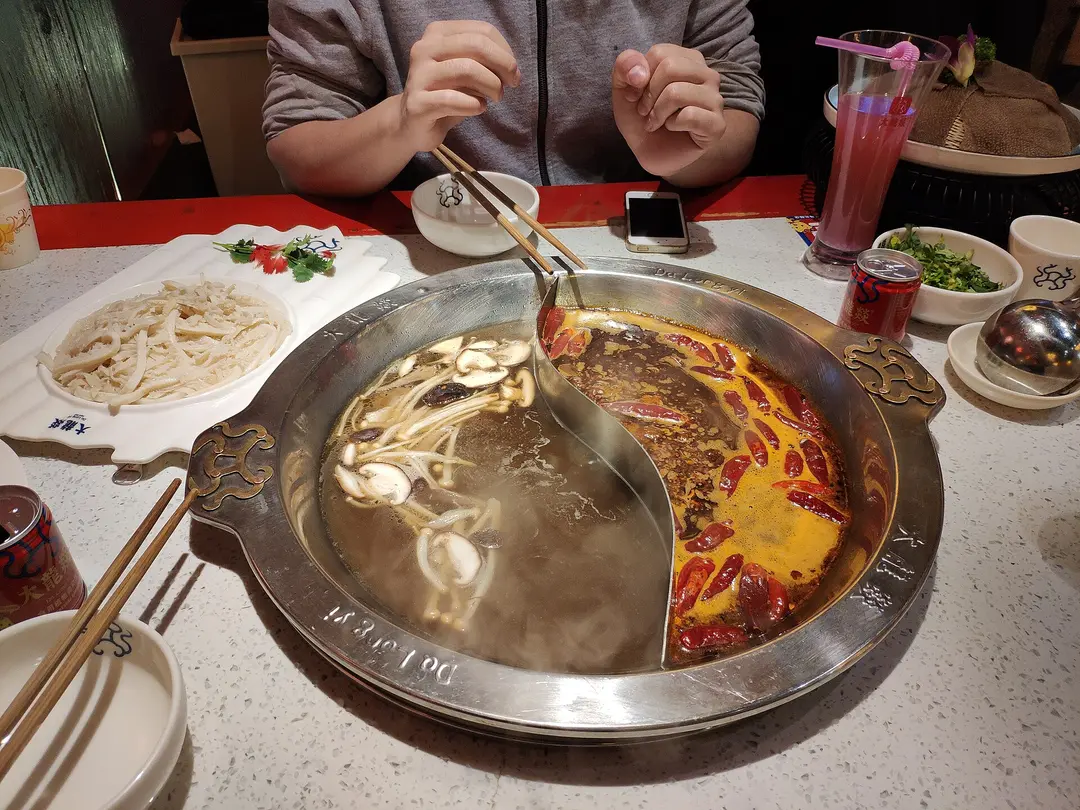
Choose the broth first. A split pot, 鸳鸯锅 (yuānyāng guō), has a divider: one side spicy red broth, the other a mild broth, often a clear bone stock. Some places also offer mushroom or other non-spicy broths. Ask for the spicy side 微辣, since the broth gets hotter as it cooks down.
Then choose raw ingredients from the menu or a display counter. Good first choices are thin-sliced beef, beef tripe (毛肚), lotus root, potato, tofu skin, mushrooms and greens. Order in rounds rather than all at once.
Make your own dipping sauce at the sauce bar. The Chengdu standard is sesame oil with crushed garlic, plus coriander and a little salt or oyster sauce. The oil cools the food and softens the heat. Some restaurants charge for the sauce per person, so check.
Thin tripe and duck intestine need only 10–15 seconds in the broth. Thin beef takes under a minute, and root vegetables a few minutes. Expect a hotpot meal to take about 90 minutes to two hours. Expect about ¥80–200 per person depending on the restaurant, and note that the broth, sauce, tea and drinks can be charged separately.
Where to eat
The Chengdu city guide suggests areas to stay; most have good food within walking distance.
Busy tourist streets such as Kuanzhai Alley, Jinli and the Chunxi Road area are convenient for snacks but cost noticeably more. Residential neighborhoods and the streets around Wenshu Monastery have cheaper noodle shops and breakfast places used by local people. A full queue of local diners is the best sign.
Dietary needs
Vegetarians should know that many vegetable dishes are cooked with meat or lard, and many red hotpot broths are made with beef tallow. Say 我吃素 (wǒ chī sù), “I am vegetarian,” and ask for a mushroom or vegetable broth. Wenshu Monastery’s vegetarian restaurant is a safe choice; see Kuanzhai Alley and Wenshu Monastery.
Peanuts and sesame appear in many dishes, including kung pao chicken and dan dan noodles. Carry a written card in Chinese if you have a serious allergy.
Paying
Most restaurants are paid with Alipay or WeChat Pay; cash is also accepted. International cards work at chains and larger restaurants but not reliably at small shops. Ask for the bill with 买单 (mǎi dān). Our paying in China guide covers setup before you travel.
Checked on 29 October 2026.