The Temple of Heaven, Tiantan in Chinese, is where the Ming and Qing emperors came each year to pray for good harvests. It sits in a walled park of old cypress trees in the south of Beijing, a short subway ride from the center. The buildings are few and spread out, so it feels calmer than the Forbidden City, even on busy days.
The park is also one of the best places in the city to see everyday Beijing life. From early morning, retirees gather in the long covered corridor and under the trees to practice tai chi, sing, dance, and play cards and chess.
Tickets and hours
The park opens at 6:00 (6:30 in winter) and admits visitors until 21:00. The three main ticketed enclosures, the Hall of Prayer for Good Harvests, the Echo Wall and the Circular Mound Altar, open at 8:00. They close at 18:00 from April to October and at 17:00 from November to March, with last entry 30 minutes before. These halls are closed on Mondays, except on public holidays.
Buy the combined ticket, ¥34 in the April-to-October season, which covers park entry and the three enclosures. A park-only ticket costs ¥15 in the same season and ¥10 in winter.
Tickets are real-name. Book one to seven days ahead through the official Temple of Heaven WeChat ticketing account, choosing passport as your ID type. On quieter days you can also buy at the entrance by scanning a QR code or asking at the service counter, but do not count on it at weekends or holidays. Bring the passport you booked with. The apps and internet guide explains how to set up WeChat before you travel.
A sensible route
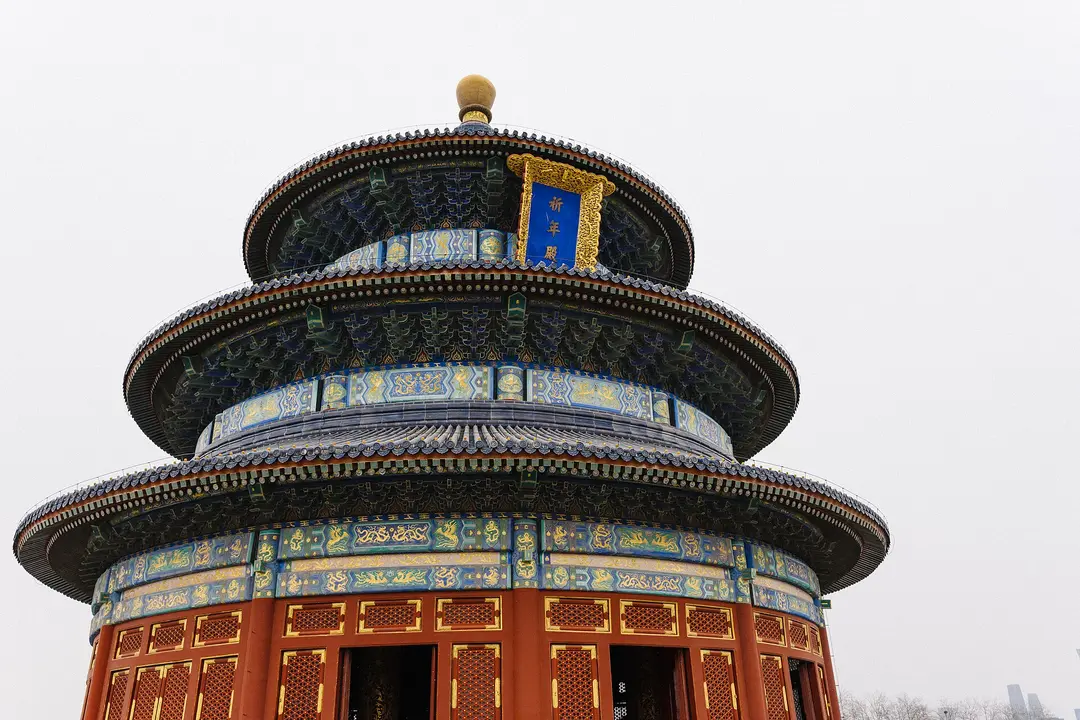
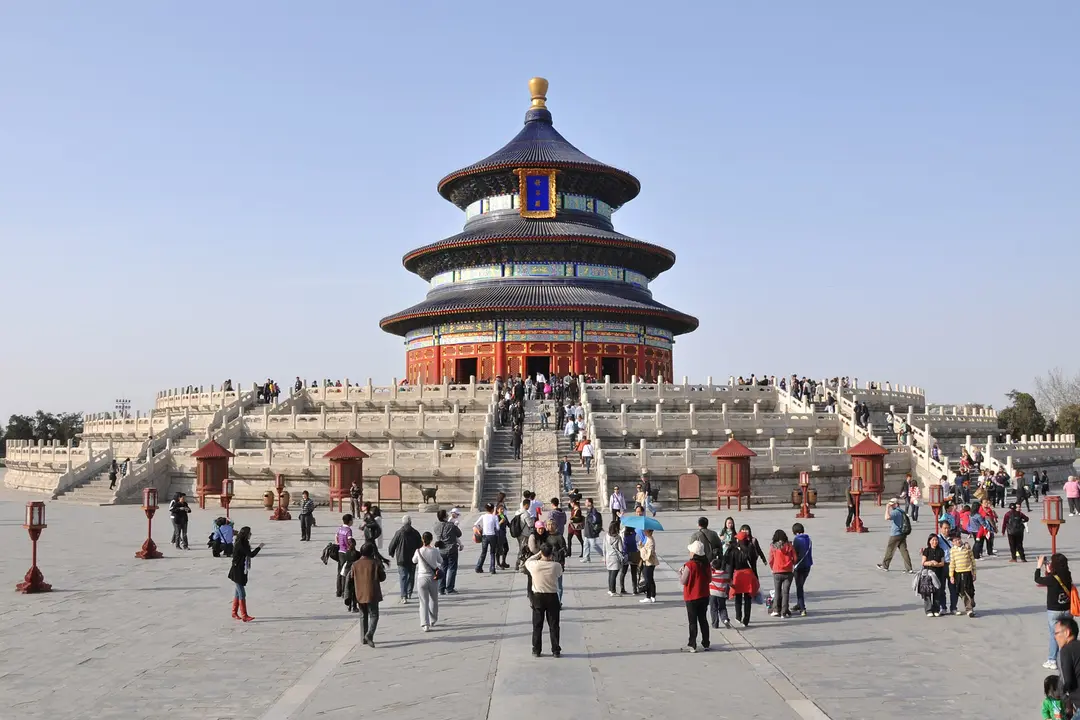
Enter by the East Gate, which is closest to the subway. Walk west through the Long Corridor, where the morning groups gather, and you reach the Hall of Prayer for Good Harvests. This round hall with three blue-tiled roofs is the building most people picture when they think of the Temple of Heaven. It stands on a three-tier marble terrace.
From there, walk south along the raised Danbi Bridge, a broad stone walkway, to the Imperial Vault of Heaven and the circular Echo Wall around it. Continue south to the Circular Mound Altar, three open marble terraces where the emperor performed the winter solstice rite.
Then either retrace your steps to the East Gate or leave by the South Gate. The whole loop is about two to three hours at an easy pace.
What you are looking at
The layout follows old ideas about heaven and earth. The southern part of the park is square and the northern part rounded, matching the belief that heaven was round and the earth square. The main altars are circular, and their tiles are blue, the color of the sky.
The emperor came here at the winter solstice to make offerings at the Circular Mound Altar, and in spring to pray for the harvest at the hall that bears its name. Before each ceremony he stayed at the Fasting Palace in the west of the park. Check at the counter whether it is included in your ticket on the day.
When to go
Come between 7:00 and 9:00 if you can. You see the park at its most local, and you can be at the Hall of Prayer for Good Harvests when it opens at 8:00, before the tour groups arrive.
Weekday mornings are the quietest. Spring and autumn are the most pleasant seasons. In winter the park is cold but clear, and the light on the blue roofs is sharp.
Tips
The grounds are large and mostly flat, with benches under the trees. Allow time to sit.
Combine the visit with lunch nearby, then head north to Qianmen and the area south of Tiananmen. Or pair a morning here with an afternoon in the Hutongs of Beijing.
Wear comfortable shoes. The park is large, and the walk from the East Gate to the Circular Mound Altar and back adds up.
Checked on 29 October 2026. Opening times and ticket rules change; confirm on the official site before you go.